Food Video Camera Angles: Faceless, Close-Up or On Camera?
Food video camera angles ranked by Blossom data: faceless cooking clips reached 5.40 times their usual views, against 1.86 times for talking to the lens.

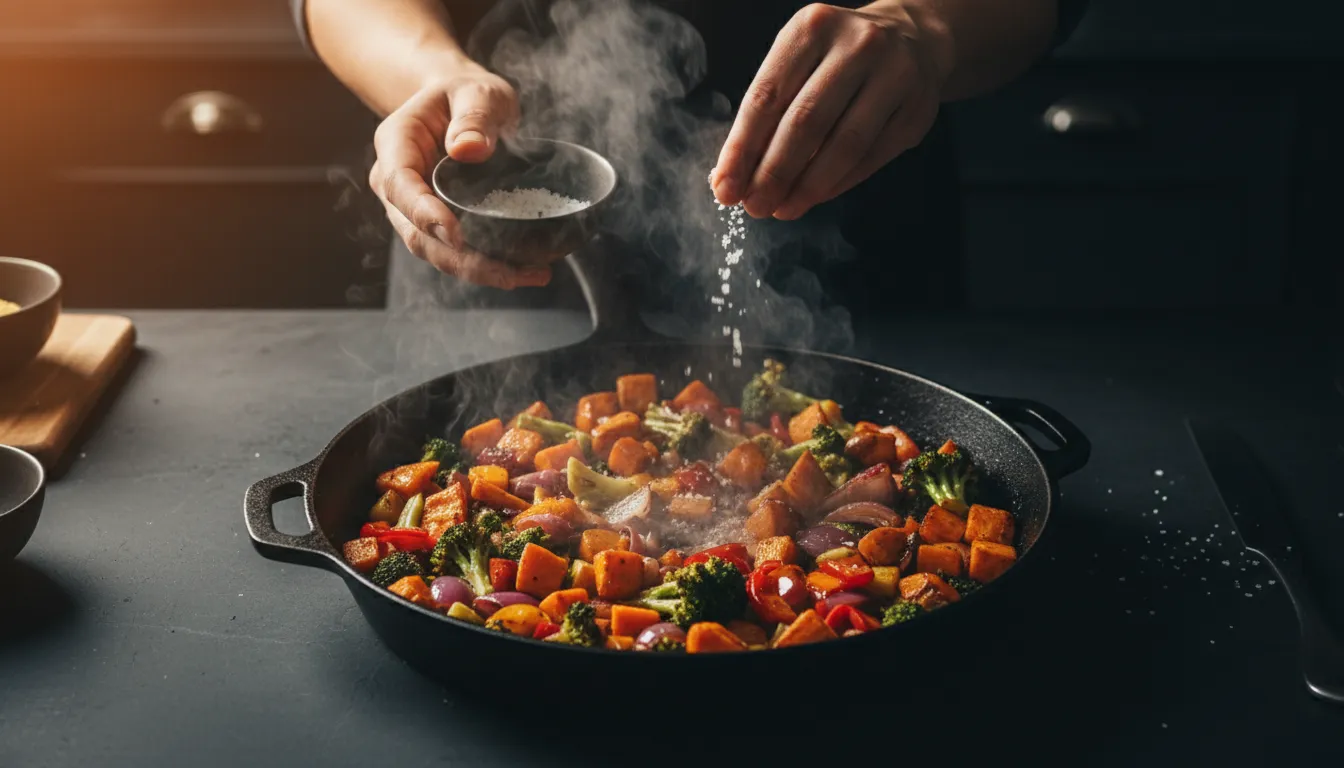
For food videos, the camera angle that reaches furthest keeps your face out and your hands, pan and plate in. In Blossom’s library, faceless cooking videos reached 5.40 times the views their account usually gets (763 videos). Food videos where the creator looks into the lens reached 1.86 times (257 videos), so faceless clips came out about 190% higher.
The typical food video reached 2.63 times its account’s usual views (3,883 videos). Two framing choices beat it, and the most common one sits a little under it.
Food video camera angles ranked by reach
These are all four framing choices with at least 30 food videos in Blossom’s library from the last six months, sorted from the highest reach to the lowest.
| How the food video is framed | Times the account’s usual views | Videos | Against the typical food video |
|---|---|---|---|
| Faceless: hands, pan, plate or POV | 5.40 times | 763 | about 105% higher |
| One fixed camera angle, no cuts | 4.11 times | 496 | about 56% higher |
| Tight close-ups on texture and detail | 2.35 times | 1,158 | about 11% lower |
| Looking straight into the lens | 1.86 times | 257 | about 29% lower |
Close-ups are the most common choice in food, with 1,158 videos, more than any other framing here. That’s the macro shot of cheese pulling or sauce dripping. It looks great, and on its own it lands a little under the typical food video.
What is the best camera angle for cooking videos?
A faceless angle works best in Blossom’s food data, with a single fixed angle in second place. In practice that’s an overhead shot of the board and pan, or a point-of-view shot from where you stand at the stove, with your hands doing the talking.
The fixed angle result is useful if you film alone. A phone on a stand above the counter, recording the whole recipe without cuts, reached 4.11 times the usual views, which beats the typical food video by about 56%.
What to pair with faceless cooking videos
Faceless food clips varied a lot depending on what you add. Here’s what they reached with other choices on top, against 2.63 times for the typical food video.
- Setting it to a trending sound: faceless cooking clips reached 17.98 times (82 videos), about 584% higher.
- Ending where it started so it loops: they reached 16.42 times (117 videos), about 524% higher.
- Using upbeat music: they reached 12.60 times (180 videos), about 379% higher.
- Opening with a line of text: they reached 9.83 times (87 videos), about 274% higher.
- Walking through the recipe step by step: they reached 8.65 times (346 videos), about 229% higher.
- Cutting on the beat: they reached 7.86 times (384 videos), about 199% higher.
- Letting the sizzle and crunch carry it: they reached 6.39 times (139 videos), about 143% higher.
Some pairings brought faceless food clips down near or below the typical food video:
- Adding a call to action: they reached 2.32 times (81 videos), about 12% lower.
- Leaving the whole clip on one fixed angle: they reached 2.41 times (38 videos), about 8% lower.
- Selling a dream kitchen or lifestyle: they reached 2.93 times (83 videos), about 11% higher.
So a faceless recipe does its best work when it’s quick, set to music, and built to loop. It does less when it ends on an ask.
A faceless recipe video, described
Picture a 15-second overhead clip of a cast iron pan. Text reads “5-minute garlic noodles” for the first second. Then come four quick cuts on the beat: garlic hitting butter, noodles going in, a toss, a fork twirl lifted toward the camera.
The last frame matches the first, an empty pan on the burner, so the video loops straight back to the start. There’s no face and no “follow for more” at the end.
How to film faceless food content this week
- Mount the phone overhead: a stand or a cheap arm above the counter gives you the angle most faceless recipes use.
- Add one closer angle: a side shot for the sizzle or the pour, cut in on the beat.
- Put the dish name in text: one line in the first second, then let the cooking work.
- Plan the loop: start and end on the same frame.
- Pick a sound: a trending one or upbeat music, under the natural kitchen audio.
For more on openings, see how to start a cooking video. For sound choices, check the food audio benchmarks, and for loops read how a looping ending holds viewers.
Check your cooking video’s framing before you post
Blossom breaks down every food video you upload, including how it’s framed, its sound and its first three seconds, then compares it with food videos that reached far beyond their account’s usual views. You’ll see whether your recipe reads as a quick faceless loop or a slow cooking show before you post. Blossom scores the video; it can’t promise views. Analyze your next recipe video.
FAQ
Do faceless cooking videos get more views?
Yes, in Blossom’s data. Faceless food videos reached 5.40 times their account’s usual views (763 videos), about 105% above the typical food video at 2.63 times.
Should I show my face in food videos?
You can, though food videos where the creator looks into the lens reached 1.86 times their usual views (257 videos), about 29% below the typical food video.
Are close-up food shots worth it?
They’re worth using as one angle among several, since close-up food videos reached 2.35 times their usual views (1,158 videos), a little under the typical food video.
What music should I use for faceless recipe videos?
A trending sound did best here, since faceless cooking clips with one reached 17.98 times their usual views across 82 videos.
How we measured this
Figures come from Blossom’s library of analyzed TikTok and Instagram videos, pulled on 2026-11-14, using videos Blossom classed as food and cooking content from the last 180 days. For each video we compare its views with the views its account usually gets, and report the median so one breakout video can’t skew a result. Every comparison has at least 30 videos on each side.
- Typical food video: 3,883 videos at 2.63 times
- Framing: faceless 763 videos at 5.40 times; one fixed angle 496 at 4.11; close-ups 1,158 at 2.35; looking into the lens 257 at 1.86
- Faceless videos paired with: trending sound 82 at 17.98; loop 117 at 16.42; upbeat music 180 at 12.60; text hook 87 at 9.83; step by step 346 at 8.65; beat-timed cuts 384 at 7.86; kitchen sounds up front 139 at 6.39; call to action 81 at 2.32; one fixed angle 38 at 2.41; lifestyle aspiration 83 at 2.93
One video can carry more than one framing choice, so the groups overlap, and the pairings rest on smaller samples than the main ranking. This shows what went together with stronger reach, and it can’t show what caused it.
Read next

Are Before and After Videos Dead? What 2026 Data Shows
No, but how you open them matters. In Blossom's library, before and after videos that tease the result reach 2.71 times an account's usual views.

Are Challenge Videos Dead on TikTok and Reels? 2026 Data
No. Blossom data shows challenge videos at 3.31 times an account's usual views across 767 videos, and their share of new posts is rising.

Are Dance Trends Dead on TikTok? What the Data Shows in 2026
No. In Blossom's library, dance trends took a 2.87 times larger share of dance videos in the last four weeks (106 videos) than in the eight weeks before (135).